October 31, 2026, 9:27 am

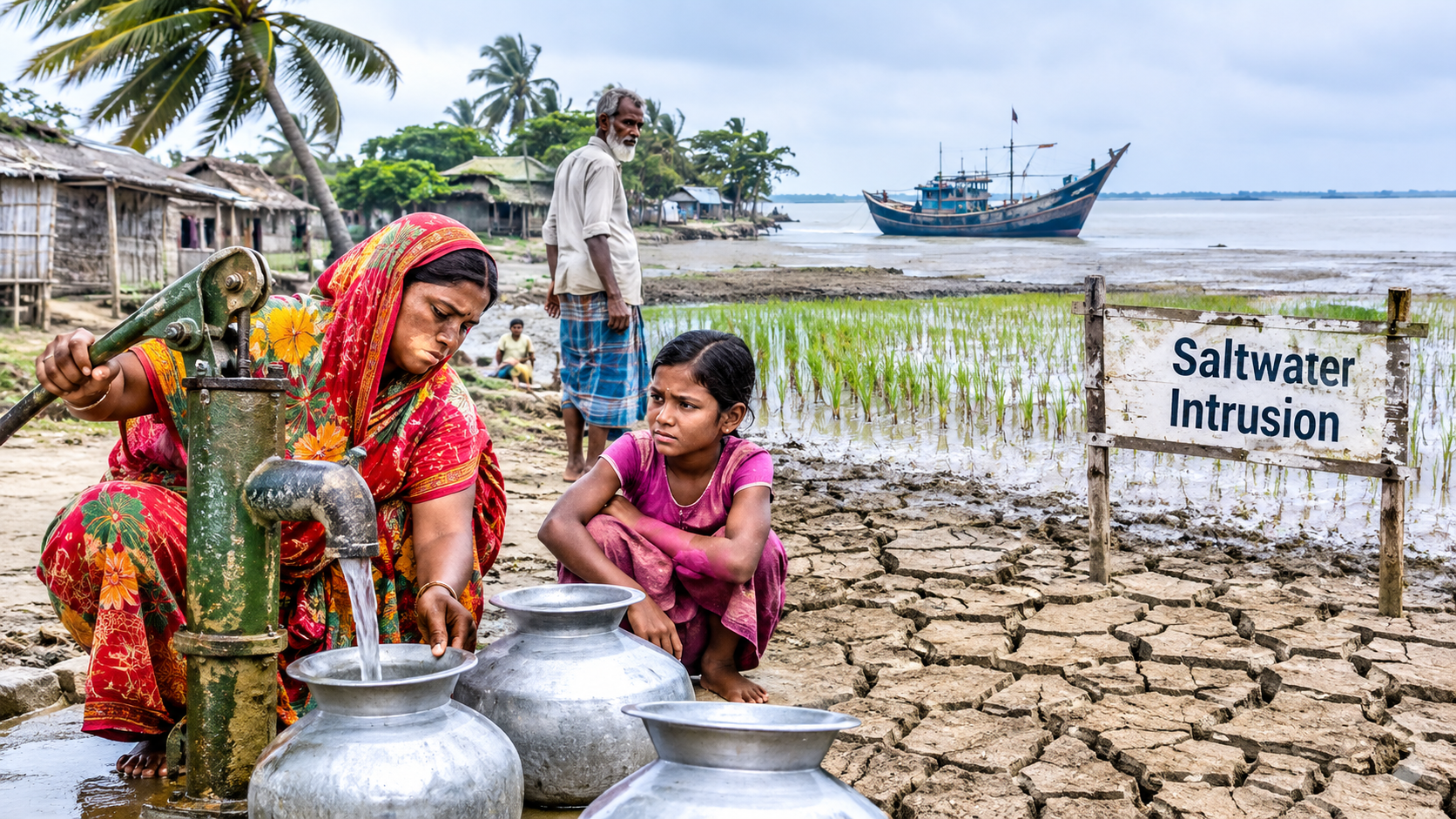

From shrinking freshwater supplies and salt-contaminated farmland to mounting health risks and forced migration, climate change is reshaping the lives, livelihoods and social fabric of Bangladesh’s coastal communities.
Dhaka : For generations, life along Bangladesh’s southern coastline revolved around rivers, rice fields, fisheries and the rhythms of nature. In districts such as Khulna, Satkhira, Bagerhat, Patuakhali and Bhola, farming, fishing and river-based trade sustained communities and shaped their cultural identities.
That familiar landscape is now undergoing a profound transformation.
Rising sea levels, expanding salinity, cyclones, river erosion and growing shortages of safe drinking water are placing unprecedented pressure on coastal communities. As traditional livelihoods become increasingly difficult to sustain, families are being pushed to change occupations, relocate and reconsider where and how they can live.
Research by international organisations, including the World Bank and the Intergovernmental Panel on Climate Change (IPCC), as well as Bangladeshi institutions such as the International Centre for Climate Change and Development (ICCCAD) and the International Centre for Diarrhoeal Disease Research, Bangladesh (icddr,b), points to the scale of the challenge.
The consequences are no longer confined to environmental degradation. They are increasingly visible in household economies, public health, food security, migration and the social structure of coastal Bangladesh.
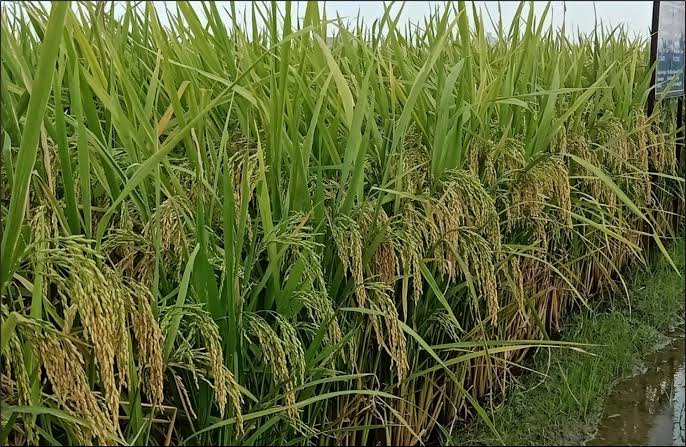
For decades, the south-western districts of Bangladesh were known for rice cultivation, vegetables and freshwater fisheries. But rising salinity has gradually altered the character of agricultural land, forcing many farmers to reconsider what they can grow.
Sea-level rise, reduced freshwater flows and land degradation are among the factors contributing to increasing salinity in coastal rivers. World Bank research has warned that river salinity in south-western Bangladesh could rise significantly by 2050, with serious implications for agriculture, drinking water and freshwater ecosystems.
In areas such as Shyamnagar in Satkhira, Koyra in Khulna and Mongla in Bagerhat, some farmers have shifted from rice cultivation to shrimp farming as freshwater becomes less accessible and saline conditions make traditional agriculture increasingly difficult.
For some households, shrimp cultivation offers an alternative source of income. But the transition also carries wider environmental and economic costs.
Researchers and local communities have raised concerns about declining soil fertility, damage to freshwater sources and the disruption of traditional rural employment. While shrimp farming has created commercial opportunities in parts of the region, its expansion has also intensified pressure on land and water resources.
The result is a changing rural economy in which traditional farming is becoming harder to sustain and the benefits of new commercial activities are not necessarily shared equally.
One of the most immediate consequences of salinity is the growing difficulty of obtaining safe drinking water.
A study by icddr,b examined 27,697 water sources across 172 villages in Khulna and Satkhira. Its preliminary findings found that 55.3 per cent of drinking-water sources in Koyra and 23.3 per cent in Ashashuni were saline.
For families living in affected communities, access to drinking water has become a daily struggle. Many women reportedly have to walk three to five kilometres to collect water from sources considered safe for consumption.
The burden goes far beyond the distance travelled. Time spent collecting water reduces opportunities for education, paid work and other household activities. It also exposes women and girls to additional physical strain and potential safety risks.
In a region where water is essential for drinking, cooking, sanitation and livelihoods, the loss of reliable freshwater sources is steadily reshaping everyday life.
The health consequences of climate change in coastal Bangladesh are becoming increasingly difficult to ignore.
Research has linked exposure to saline drinking water with elevated risks of hypertension and other cardiovascular complications. Concerns have also been raised about kidney-related problems, pregnancy complications and skin diseases in affected communities.
In a study involving 15,471 adults, icddr,b researchers identified moderate or high cardiovascular risk in approximately 21.6 per cent of participants. The findings point to a significant public health concern in coastal areas, although the relationship between individual health outcomes and water salinity requires careful assessment alongside other risk factors.
The implications are particularly serious for people who have limited access to healthcare, reliable drinking water and preventive health services.
For many coastal households, climate-related health risks are layered on top of existing economic vulnerability. Families struggling with declining incomes and damaged homes may also face rising medical expenses and longer journeys to access treatment.
This makes climate change not only an environmental challenge but also a growing public health concern.
The effects of salinity are also transforming the rivers and fisheries that have long sustained coastal communities.
A World Bank study published in 2025 found that increasing river salinity in south-western Bangladesh is changing the availability and distribution of fish species. Freshwater species are declining in some areas, while species that tolerate saline conditions are becoming more prevalent.
Such changes could have long-term consequences for local food security and nutrition.
Fish is a major source of animal protein for many coastal households. Changes in the availability of familiar freshwater species may affect both household diets and the income of small-scale fishers.
The shift also threatens traditional fishing practices and local knowledge built around particular rivers, seasons and fish populations.
For communities whose livelihoods depend on access to natural resources, the changing composition of fisheries represents another layer of uncertainty.
Cyclones Sidr, Aila, Amphan, Yaas and Remal have left lasting marks on Bangladesh’s coastal communities.
The destruction caused by major storms is not limited to homes and infrastructure. Each disaster can disrupt education, employment, local markets, social networks and the fragile economic foundations of rural households.
Damage to embankments and settlements can expose communities to repeated flooding and saline-water intrusion. Families already burdened by debt may find it increasingly difficult to rebuild after successive disasters.
The combination of damaged infrastructure, unstable livelihoods and water shortages is making permanent settlement more difficult in some coastal locations.
Climate-related hazards do not affect all households equally. Poor families, landless workers, women, children and people with limited access to resources often have fewer options to recover and adapt.
For many, rebuilding after a disaster has become a recurring struggle rather than a return to normal life.
As livelihoods deteriorate and living conditions become more difficult, migration is emerging as a coping strategy for many coastal families.
The World Bank’s Groundswell research has warned that climate change could drive more than 40 million people in South Asia to migrate within their own countries by 2050 under certain scenarios. Its global assessment projected that climate impacts could force up to 216 million people across six regions to move within their own countries by the same year.
A separate report citing Asian Development Bank estimates has suggested that around 7.5 per cent of Bangladesh’s population could become internal climate migrants by 2050.
For families leaving Satkhira, Bhola, Patuakhali or Barguna, migration is often less a matter of choice than an attempt to secure work, shelter and basic services.
Many eventually move to Dhaka and other urban centres, where they often settle in overcrowded informal settlements and take up low-paid work.
Their movement is not always recorded as climate migration. People may leave because of lost farmland, damaged homes, declining fishing opportunities, repeated flooding or the lack of safe drinking water. Yet climate-related pressures can be a major factor behind these decisions.
Migration may offer temporary relief, but it can also create new challenges. Urban areas must absorb additional demand for housing, sanitation, healthcare, education and employment, while migrants themselves face insecure jobs and inadequate living conditions.
The movement of people from the coast to cities is therefore not simply a rural issue. It is also becoming a major challenge for Bangladesh’s urban planning and development.
The Sundarbans, the world’s largest mangrove forest and a vital natural barrier for Bangladesh’s southern coastline, is also facing growing environmental stress.
Rising salinity is changing the forest’s ecological conditions and threatening species that are sensitive to changes in freshwater availability. The Sundari tree, one of the forest’s most characteristic species, is among those facing pressure.
The forest plays a critical role in protecting coastal settlements from storm surges and cyclones. It also supports biodiversity, fisheries and the livelihoods of communities that depend on its resources.
Its degradation would therefore have consequences far beyond the forest itself.
Some studies have warned that a one-metre rise in sea level could put a substantial part of the Sundarbans at risk. The precise scale of the impact will depend on several factors, including the rate of sea-level rise, sediment dynamics, freshwater flows and the forest’s capacity to adapt.
Nevertheless, the warning is clear: damage to the Sundarbans could weaken one of Bangladesh’s most important natural defences against coastal hazards.
Bangladesh’s coastal crisis is part of a much wider global challenge.
The World Bank estimates that, without effective climate and development action, climate change could force up to 216 million people to migrate within their own countries by 2050 across six regions of the world.
Coastal communities in many countries are facing similar pressures on agriculture, fisheries, food supply systems, public health and economic stability.
The consequences could extend to labour markets, urbanisation, migration patterns and geopolitical relations. As climate-related displacement increases, countries will face growing demands for adaptation financing, resilient infrastructure and coordinated migration policies.
But the burden is not distributed equally. Countries and communities that have contributed relatively little to global greenhouse gas emissions are often among those facing the most severe consequences.
Bangladesh’s coastal population is a stark example of this imbalance.
The transformation of Bangladesh’s coastline is no longer a distant warning about the future. It is already affecting where people live, what they grow, what they eat, how they earn a living and whether they can remain in their ancestral communities.
Addressing the crisis will require more than emergency relief after cyclones or the construction of embankments. A sustainable response must combine climate adaptation with long-term social and economic planning.
Key priorities include strengthening and maintaining coastal embankments, ensuring reliable access to safe drinking water, promoting climate-resilient agriculture, protecting freshwater ecosystems and improving access to healthcare.
Communities also need livelihood options that do not deepen environmental degradation. Small-scale farmers and fishers require support to adapt to changing conditions, while families who can no longer safely remain in their homes need planned, dignified relocation and rehabilitation.
At the international level, reducing greenhouse gas emissions and ensuring adequate climate finance for vulnerable countries remain essential.
The central question is no longer whether climate change will alter life along Bangladesh’s coast. It already has.
The more urgent question is whether governments, development partners and communities can respond quickly enough to protect the people whose lives, livelihoods and identities are being reshaped by a changing climate.