April 7, 2026, 4:22 am


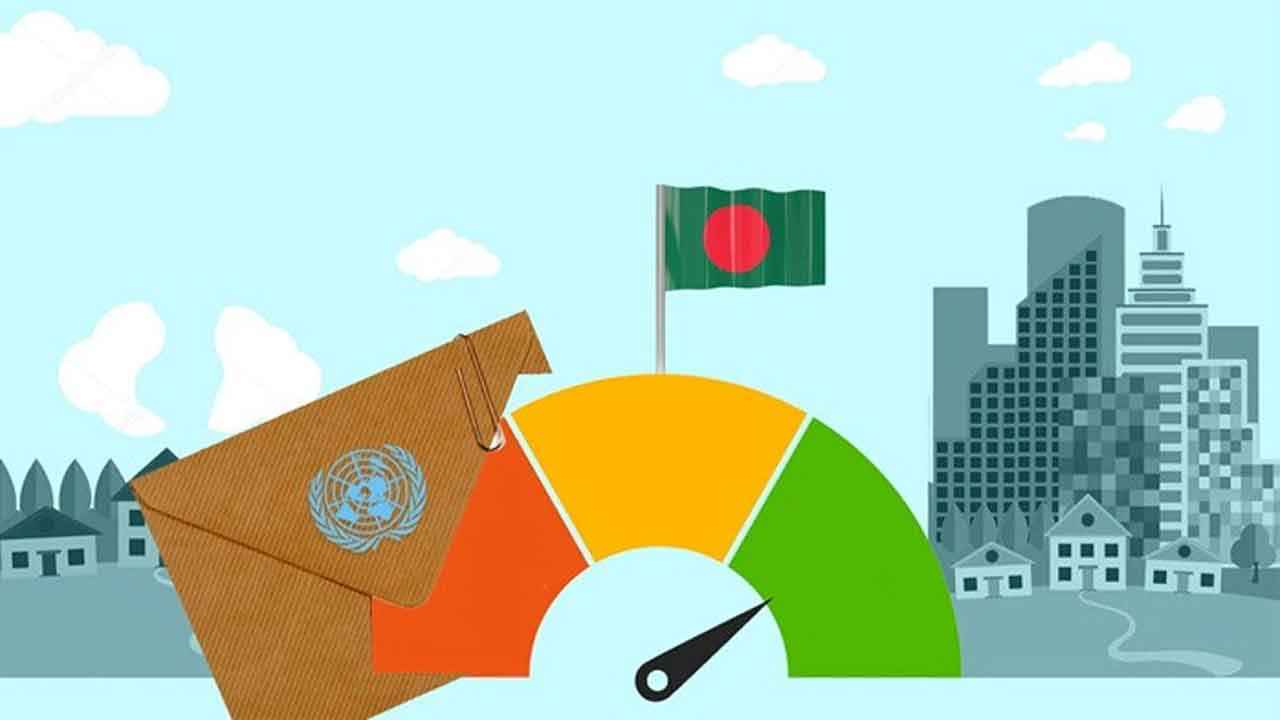
As dramatic as Tarique Rahman’s political comeback has been, the economic road ahead appears far more complex. Campaign pledges are easier delivered from the stage than balanced in a national budget ledger. Now, standing within reach of power, his biggest test lies not in rhetoric—but in reviving a strained economy.
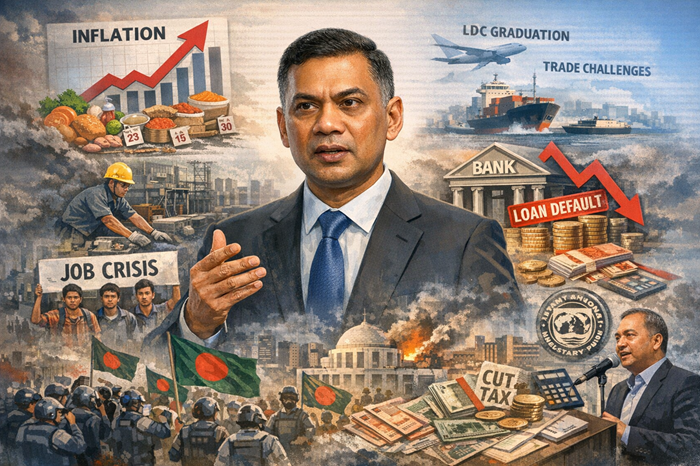
Bangladesh’s economy is at a critical juncture. High inflation, revenue shortfalls, sluggish trade and commerce, a fragile banking sector, mounting debt pressures, and inherited liabilities such as the proposed pay scale and restructuring of institutions like Sammilita Islami Bank are tightening fiscal space. Against this backdrop, expectations are soaring.
Rahman has already signaled ambitious commitments: family cards, agricultural support cards, expanded healthcare, the creation of 10 million jobs in five years, and honorariums for religious leaders including imams and muezzins. The central question now is whether political momentum can be translated into economic stability—or whether public expectations will collide with fiscal realities.
Inflation remains the most immediate and politically sensitive challenge. Rising prices over recent months have eroded purchasing power, making cost of living the defining issue for ordinary citizens. Analysts warn that inflation in Bangladesh has evolved beyond temporary shocks into a structural problem.
According to Mostafizur Rahman of the Center for Policy Dialogue (CPD), inflation has persisted at high levels and will not subside easily without structural reforms. Market monitoring alone will not suffice; supply chain reform and increased domestic production will be essential.
Failure to curb inflation quickly could erode the very trust that fueled Rahman’s rise.
Each year, nearly two million young Bangladeshis enter the labor market, with youth unemployment hovering around 13.5 percent. Rahman’s promise to generate 10 million jobs in five years is bold—but economists caution that achieving it will require massive investment, industrial expansion, SME growth, and technological advancement.
Zahid Hossain, former chief economist of the World Bank’s Dhaka office, notes that employment generation has stagnated amid weak investment and limited new business formation. Without a surge in private investment, job creation targets may prove elusive.
Business leaders see restoring law and order as foundational. Knitwear entrepreneur and former BKMEA president Fazlul Haque has expressed cautious optimism following recent discussions with Rahman. He points to commitments on improving governance, restructuring the banking sector, reducing interest rates, and increasing energy supply.
Rahman himself has pledged zero tolerance for chaos and emphasized building an economy where business thrives on “ability and talent,” not favoritism. “We don’t want to give any special group a chance,” he stated, positioning meritocracy as a core principle.
Yet reviving foreign direct investment—absent in significant volumes over the past year and a half—will depend on restoring confidence in governance and macroeconomic stability.
Economists widely agree that private investment cannot rebound without stabilizing the financial sector. Non-performing loans, governance weaknesses, liquidity shortages, and politically influenced lending have undermined stability.
Zahid Hossain warns that without depoliticized loan management and strict oversight, financial transparency will remain out of reach. Rising interest rates have further dampened investment while widening inequality.
Revenue collection remains under strain. The National Board of Revenue faces a significant shortfall in customs and tax collection during the current fiscal year. At the same time, campaign promises imply increased public expenditure.
Economists caution that unless revenue mobilization improves—through curbing tax evasion, enhancing digital monitoring, and reforming tax administration—the government may face difficult borrowing decisions to sustain development spending and social protection programs.
Additionally, subsidy burdens in the energy sector, exchange rate pressures, and reform conditions from international partners such as the IMF may force politically sensitive choices. Balancing popularity with fiscal prudence will define the new administration’s economic credibility.
Bangladesh’s graduation from the Least Developed Country (LDC) category will gradually reduce tariff benefits, intensifying competition for its ready-made garment exports. Diversifying export markets and negotiating favorable trade agreements are now strategic imperatives.
Business leaders have suggested exploring options regarding the timing of LDC graduation and pursuing counter-agreements in response to emerging regional trade dynamics.
The hardest battle in governance is not arithmetic—it is trust. Economic recovery will depend as much on public confidence as on fiscal discipline.
If Tarique Rahman can translate political capital into structural reform—curbing inflation, restoring banking transparency, boosting investment, and safeguarding fiscal stability—the wheels of the economy may begin turning again.
If not, the difficult equation of expectations versus economic reality may prove the defining challenge of his leadership.